Electric-GS is an experienced manufacturer of medium voltage and low voltage electrical equipment in Yueqing, Zhejiang, China. This guide is part of our engineering knowledge series to help buyers, engineers and contractors make correct decisions for power distribution projects.
Why Inverter Sizing Is Critical for Solar Projects
An undersized inverter clips energy on sunny days. An oversized inverter wastes money and can operate outside its efficient range. Correct inverter sizing maximizes return on investment for any photovoltaic plant.
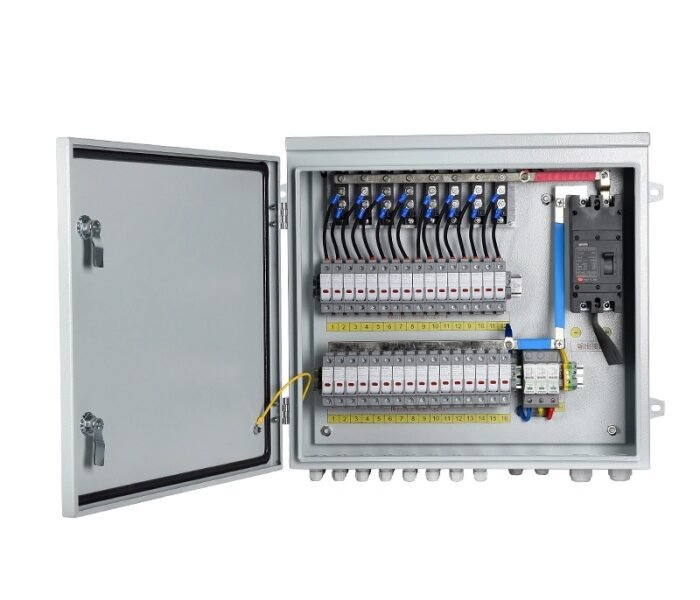
This guide covers DC/AC ratio, string design, temperature effects and practical sizing steps. For the DC collection side, also read our guide on PV combiner boxes vs solar junction boxes.
The Most Important Number: DC/AC Ratio
The DC/AC ratio (also called inverter loading ratio, ILR) compares array DC power to inverter AC power. A ratio of 1.1 to 1.3 is typical. Solar irradiance rarely reaches full STC, so slight oversizing of the DC array keeps the inverter near full output for more hours.
7 Steps to Size a Solar Inverter
- Calculate total array DC power from module datasheet (STC)
- Choose a target DC/AC ratio (start with 1.2)
- Check inverter maximum input voltage at cold temperature
- Check minimum input voltage at hot temperature for startup
- Verify string length fits the MPPT voltage window
- Confirm inverter AC output matches grid voltage and frequency
- Check ambient temperature derating and installation site
String Design: Voltage and Current Limits
| Parameter | Must Satisfy |
|---|---|
| Max string voltage (cold) | Below inverter absolute max input voltage |
| MPPT operating window | String Vmp inside window |
| Max input current | String Imp below inverter max per MPPT |
| Short circuit current | Isc x 1.25 below inverter rating |
Temperature Derating You Cannot Ignore
Module voltage rises when it gets cold and falls when hot. Use the module temperature coefficients to calculate the actual string voltage at the record low and high temperatures of your site. Ignoring this causes inverter damage on cold winter mornings.
String Inverters vs Central Inverters vs Microinverters
- String inverters: best for most residential and commercial systems
- Central inverters: lowest cost per watt for large utility plants
- Microinverters: module-level monitoring and shading tolerance
- Hybrid inverters: add battery storage capability
FAQ About Solar Inverter Sizing
What is the best DC/AC ratio?
1.1 to 1.3 is standard. High-irradiance sites with cheap modules can go to 1.4-1.5 if the inverter accepts clipping well.
Can an inverter be oversized?
Yes, and it should not exceed the array capacity or it runs inefficiently at light load.
What happens if string voltage exceeds inverter max?
The inverter can be permanently damaged. Always calculate cold-temperature string voltage.
How many strings can one MPPT tracker handle?
It depends on current rating. Check the datasheet for max input current per MPPT.
Do I need a DC combiner box with string inverters?
Not always, but for large arrays a combiner box simplifies wiring, adds fusing and monitoring, and reduces cable cost.
Can Electric-GS help design the DC side?
Yes, we supply PV combiner boxes and LV panels and can review your string design. Contact info@electric-gs.com.
Real Sizing Example: 500kW Commercial PV Plant
Take a commercial rooftop with a 500kWp array made of 545W modules. Using a DC/AC ratio of 1.25, the inverter AC rating should be around 400kW. With three 125kW string inverters, each MPPT handles roughly 5 strings of 24 modules, and the total string voltage at 10 degrees Celsius stays about 1,050V, comfortably inside the 1,100V maximum.
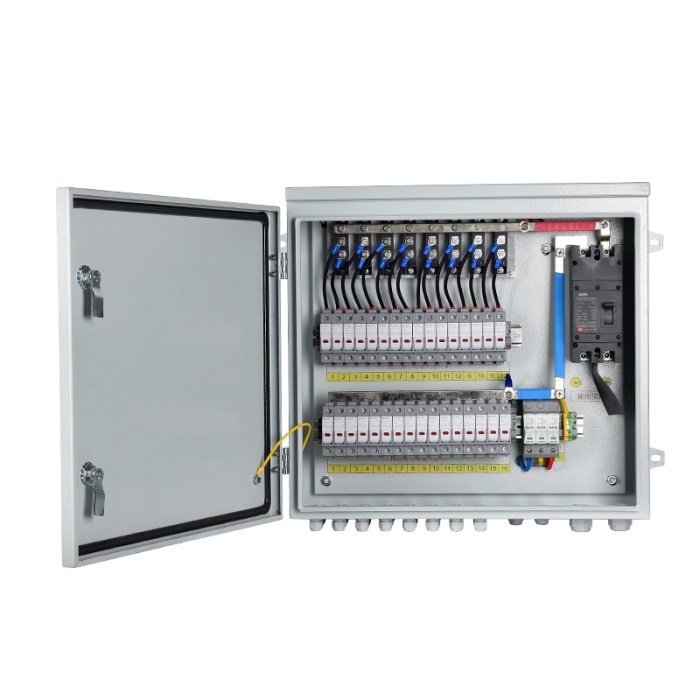
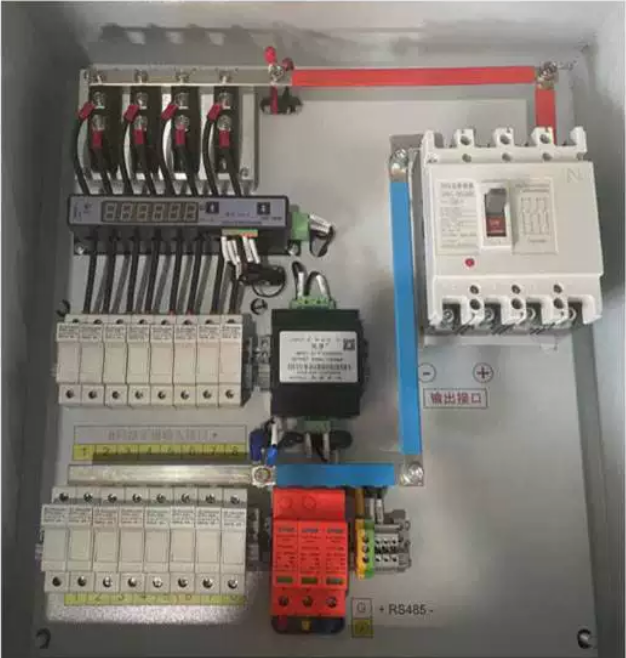
We also added a 12-string PV combiner box per inverter to fuse and monitor each string, which cut DC cable length by almost 40% and made troubleshooting much faster. The monitoring data showed the system operated at over 98% of expected annual production in the first year, with clipping losses of only 1.8%.
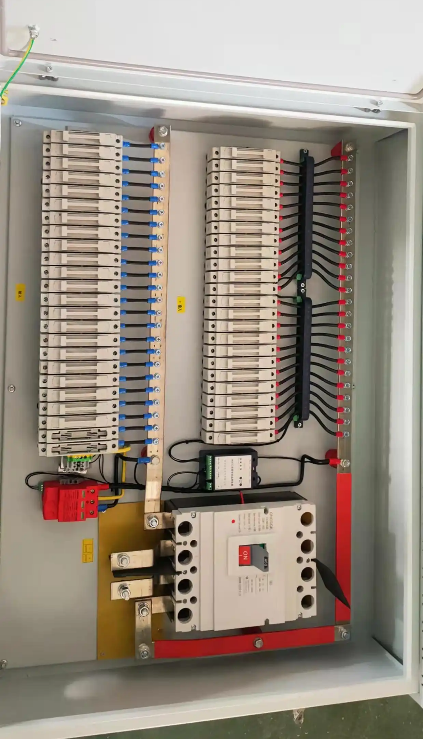
If you are building a similar system, request our free string design review. We can check your voltage windows, fuse ratings and cable schedules, and supply the complete DC collection equipment. Contact info@electric-gs.com or visit our partner site electric-cn.com for solar distribution products.
Monitoring and Performance Verification After Commissioning
Once your inverter plant is online, verify performance during the first month. Compare actual yield with the simulation, check that each MPPT is producing close to its expected share, and review clipping events. If one MPPT consistently underperforms, check string mismatch, soiling and module faults with an I-V curve tester.
Set alarms for inverter temperature, DC insulation resistance and grid voltage anomalies, and keep the combiner box records updated with string fusing and SPD status. A well-monitored plant reaches 95-98% of simulated yield in its first year. For the DC side equipment that supports your inverter, see our PV combiner box guide and its installation requirements.
Common Sizing Mistakes and How to Avoid Them
The most frequent errors we see in inverter sizing are: using STC values without temperature derating, forgetting the 1.25 factor for cable and fuse sizing, choosing an inverter whose MPPT voltage window does not cover the cold morning string voltage, and ignoring the grid import/export rules of the local utility. Each mistake either damages equipment or forces expensive redesign after installation.
Document every assumption in your sizing sheet: module datasheet values, site temperature records, inverter limits and grid requirements. Review the sheet with a second engineer before ordering, and keep it with the project file for future expansion. If you are adding battery storage later, choose an inverter with hybrid capability now to avoid replacing equipment. For more on the DC side design, see our PV combiner box guide.
In summary, a careful sizing study done once, correctly, saves more money than any other single design activity in a solar project, and it takes less than one day of engineering work.
About Electric-GS
Electric-GS is a professional OEM/ODM factory in Yueqing, Zhejiang, China, specializing in ring main units, gas insulated switchgear, vacuum circuit breakers, transformers, LV/MV switchgear and solar power distribution equipment. All products are manufactured with strict quality control and IEC standard testing. For quotations, drawings or customization, contact us at info@electric-gs.com or WhatsApp +86 135 8897 8050.
One thought