
Global Medium Voltage RMU Standards and Applications by Country
1. Introduction
With the globalization of the power industry, Ring Main Units (RMUs) have become increasingly important in power distribution systems worldwide. However, due to variations in the historical development, technical standards, and operational environments of power systems, countries and regions have adopted different voltage and frequency standards. Understanding these standards is essential for manufacturers planning product adaptation, export strategies, and international market development.
This article provides an in-depth analysis of commonly used medium voltage levels around the world, highlights the application scenarios of RMUs, and offers a detailed and highly readable global voltage standard guide.

2. Definition of Global Medium Voltage Levels
Medium Voltage (MV) in power systems typically refers to the voltage range between 1kV and 69kV. In RMU applications, the most common voltage levels fall between 6kV and 38.5kV. The general classification is as follows:
6kV – 15kV: Common in urban distribution and small-scale industrial systems
20kV – 24kV: Widely used under IEC standards in Europe
27.6kV – 34.5kV: Standard in North and South America
33kV – 38.5kV: Used in large-scale industrial sites, wind farms, and substation feeder lines

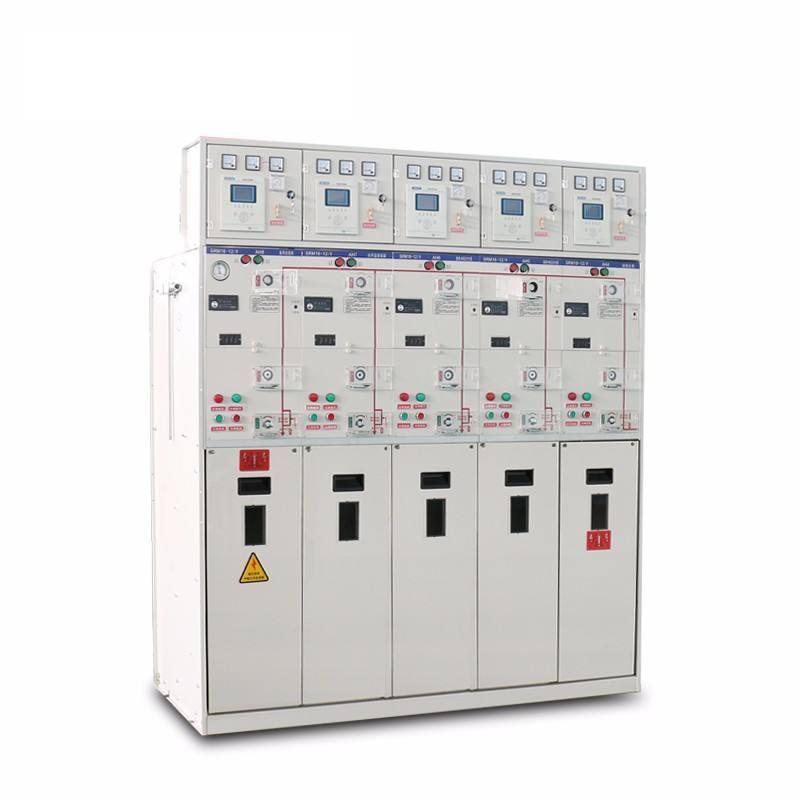
Medium Voltage RMU
3. Country-by-Country MV RMU Voltage Standards
The table below lists the commonly used medium voltage levels and frequency standards in different countries and regions:
| Country/Region | Common MV Levels (kV) | Frequency (Hz) | Notes |
|---|---|---|---|
| China | 6 / 10 / 20 / 35 | 50Hz | 10kV is dominant in cities; 35kV more common in rural grids |
| Japan | 6.6 / 22 | 50 / 60Hz | Different frequencies in East and West Japan |
| South Korea | 6.6 / 22 / 34.5 | 60Hz | Used widely in commercial and industrial sectors |
| India | 11 / 22 / 33 | 50Hz | RMUs widely used in public grids and industry |
| Vietnam | 22 / 35 | 50Hz | IEC-based standards after reform |
| Thailand | 22 / 33 | 50Hz | 22kV in urban distribution, 33kV in industrial areas |
| Philippines | 13.8 / 23 / 34.5 | 60Hz | US-standard grid, urban and commercial usage |
| Malaysia | 11 / 22 / 33 | 50Hz | Widely used in industrial parks and distribution networks |
| Indonesia | 20 / 30 / 33 | 50Hz | Often paired with cable branch boxes |
| Nepal | 11 / 33 | 50Hz | 11kV RMUs used in national grid projects |
| Saudi Arabia | 13.8 / 33 | 60Hz | Common in oil & gas, municipal projects |
| UAE | 11 / 33 | 50Hz | Standardized RMU setups by DEWA / ADDC |
| Qatar, Kuwait, Oman | 11 / 33 | 50Hz | Used in government and utility company projects |
| South Africa | 11 / 22 / 33 | 50Hz | Large demand for exported RMU systems |
| Egypt | 11 / 22 / 33 | 50Hz | Bulk government purchases common |
| Kenya, Nigeria, etc. | 11 / 33 | 50Hz | Mostly use local or Chinese-made RMUs |
| United Kingdom | 11 / 33 / 66 | 50Hz | Urban grid and substation systems |
| Germany, France, NL | 12 / 24 | 50Hz | Fully IEC-compliant; 24kV RMUs common |
| United States | 13.8 / 15 / 27.6 / 34.5 | 60Hz | ANSI standard, cabinet or pad-mounted RMUs |
| Canada | 4.16 / 13.8 / 27.6 / 34.5 | 60Hz | Commonly uses underground or outdoor compact RMUs |
| Brazil, Mexico, Argentina | 13.8 / 34.5 | 60Hz | US-standard systems, key export markets |
| Australia, New Zealand | 11 / 22 / 33 | 50Hz | IEC standards; RMUs used in both urban and industrial applications |
4. RMU Product Adaptation Recommendations
To ensure compatibility and compliance when exporting RMUs, manufacturers should consider the following:
1. Certification According to Market Standards
Europe: IEC 62271-200 standard required
USA: Compliance with ANSI C37 series
Middle East & Africa: IEC-based with added designs for heat and dust resistance
2. Flexible RMU Configuration
Support for multi-voltage surge arresters, CTs, and switching units
Inlet/outlet terminals adapted to local cable types and connectors
3. Frequency Adaptation (50Hz / 60Hz)
Insulation, heat dissipation, and mechanical integrity must be enhanced for 60Hz systems
Would you like me to turn this into a professionally designed brochure with your company branding (CHNGS / Gongshun Electric)?