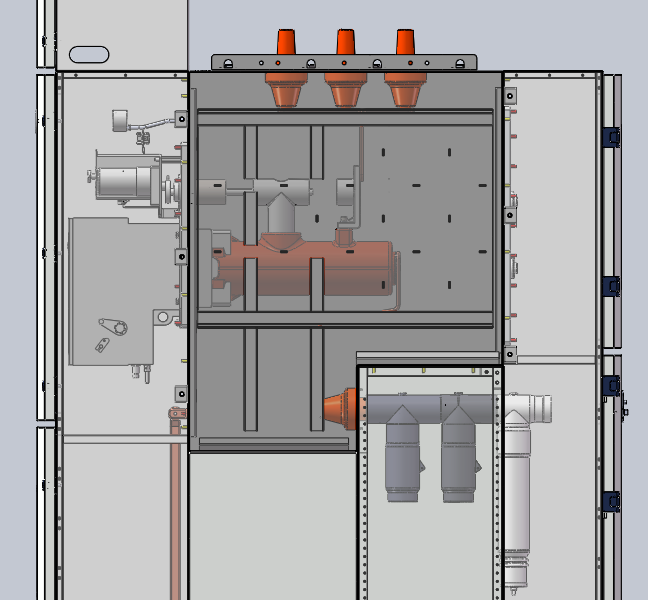
Electric-GS is an experienced manufacturer of medium voltage and low voltage electrical equipment in Yueqing, Zhejiang, China. This guide is part of our engineering knowledge series to help buyers, engineers and contractors make correct decisions for power distribution projects.
Why the GIS vs AIS Debate Matters in 2026
Choosing between gas insulated switchgear (GIS) and air insulated switchgear (AIS) is one of the most important decisions in any 33kV or 66kV substation project. The two technologies look similar on paper, but they differ enormously in land requirement, maintenance cost, safety and life cycle expense.
In this guide we compare GIS and AIS across 10 practical dimensions, then give you a simple selection checklist based on site conditions and budget.
What Is GIS and What Is AIS?
GIS (Gas Insulated Switchgear) houses all live parts inside sealed enclosures filled with SF6 gas. The gas provides dielectric insulation, so conductors can be placed very close together.
AIS (Air Insulated Switchgear) uses air as the main insulation medium. Busbars, disconnectors and circuit breakers are mounted in the open air or inside conventional metal enclosures with generous clearances.
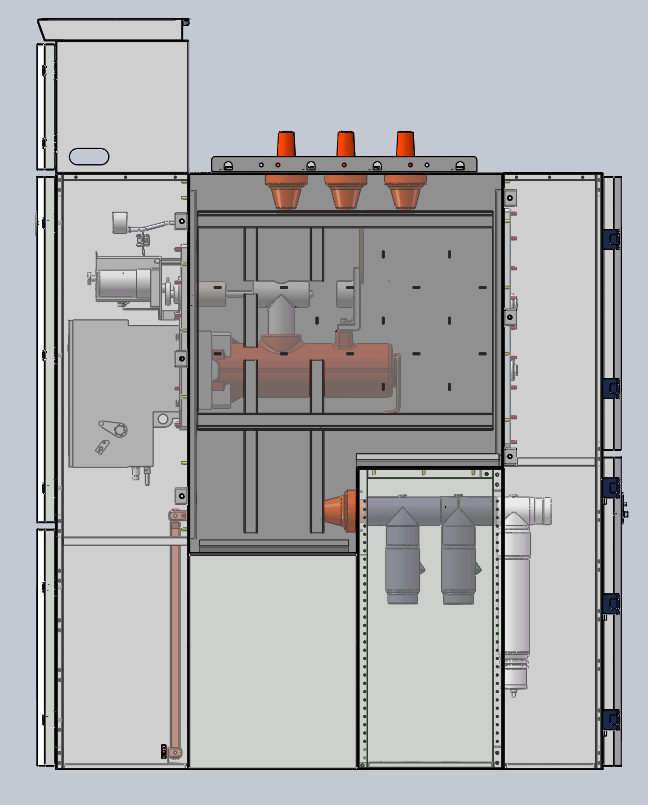
Our factory supplies both withdrawable and fixed switchgear, so we can share real production experience for both technologies.
10 Key Differences Between GIS and AIS
| Comparison Item | GIS | AIS |
|---|---|---|
| Land footprint | Compact, 70-90% smaller | Large, wide clearances needed |
| Installation cost | Higher initial cost | Lower initial cost |
| Maintenance frequency | Low, sealed compartments | Higher, exposed parts |
| Environment protection | Excellent, sealed from dust and salt | Weather dependent |
| SF6 gas handling | Required, needs monitoring | Not required |
| Safety for personnel | Higher, fewer exposed parts | Standard, visible live parts |
| Earthquake resistance | Better | Lower |
| Expansion flexibility | Moderate | Very easy |
| Life cycle cost | Lower in urban areas | Lower in rural areas |
| Lead time | Longer | Shorter |
Footprint and Land Cost
This is usually the deciding factor. A 33kV GIS substation typically occupies only 10-30% of the area needed for an equivalent AIS substation. In cities, industrial parks or on offshore platforms, land is expensive and GIS pays for itself quickly.
If you have plenty of low-cost land in a remote area, AIS remains a very practical choice.
Maintenance Differences You Must Know
GIS Maintenance
- Sealed SF6 compartments rarely need internal work
- Routine tasks: gas pressure checks, leak detection, breaker operation tests
- Specialized training and tools required
AIS Maintenance
- Insulators and contacts exposed to pollution, rain and salt
- More frequent cleaning and torque checks
- General electricians can perform most tasks

Reliability and Safety Comparison
Because all live parts of GIS are enclosed in earthed metal housings, personnel cannot accidentally touch energized components. GIS also performs better in polluted, coastal or high-altitude sites. For critical applications such as data centers and hospitals, GIS is often the default choice.
Read our related guide on outdoor compact substation protection and earthing design to understand how both technologies are protected.
Cost Breakdown: Initial vs Life Cycle
Initial cost of GIS is roughly 1.3 to 1.8 times that of AIS for the same rating. However, when land cost, civil works and long-term maintenance are included, GIS often has a lower total life cycle cost in dense urban locations.
How to Choose: Simple Decision Checklist
- Land cost high or space limited? Choose GIS
- Coastal, dusty or polluted environment? Choose GIS
- Remote site with cheap land? AIS is fine
- Short construction schedule? AIS is faster
- Small utility team with limited training? AIS is easier to maintain
FAQ About GIS and AIS
Is GIS safer than AIS?
Yes, generally safer because all live parts are enclosed and earthed, which reduces the risk of accidental contact.
Can GIS and AIS be combined in one substation?
Yes, hybrid substations use GIS for the switchyard and conventional equipment elsewhere. This is common in retrofit projects.
Is SF6 gas harmful to the environment?
SF6 has a high global warming potential, so modern GIS uses leak monitoring, lower gas volume designs and alternative gases. Proper recycling is mandatory.
What is the typical lifespan of GIS?
With proper maintenance, GIS can last 30-40 years.
Which is cheaper for a small 33kV substation?
For a small remote substation, AIS is usually cheaper. For a compact urban substation, GIS may be cheaper overall.
Does Electric-GS manufacture both GIS and AIS?
Yes. We supply MV GIS, RMU and LV/MV AIS panels. Contact us for a free project comparison.
About Electric-GS
Electric-GS is a professional OEM/ODM factory in Yueqing, Zhejiang, China, specializing in ring main units, gas insulated switchgear, vacuum circuit breakers, transformers, LV/MV switchgear and solar power distribution equipment. All products are manufactured with strict quality control and IEC standard testing. For quotations, drawings or customization, contact us at info@electric-gs.com or WhatsApp +86 135 8897 8050.