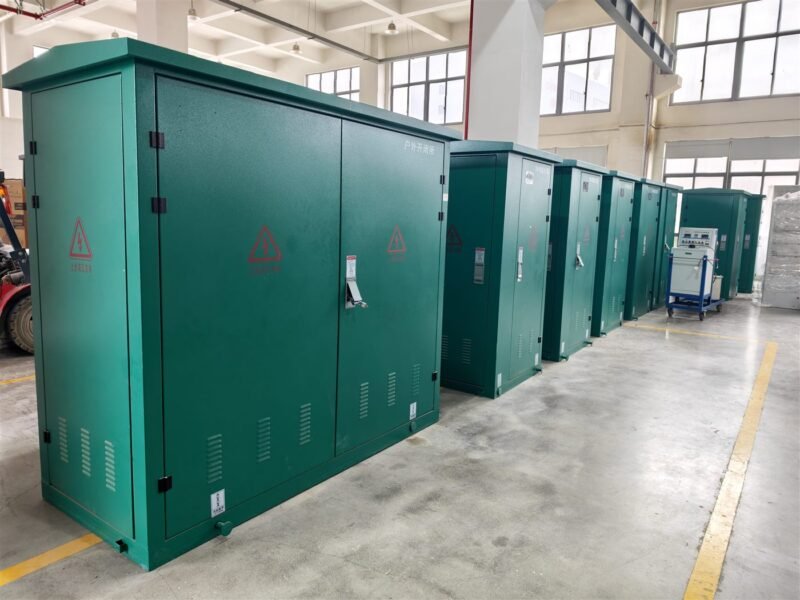
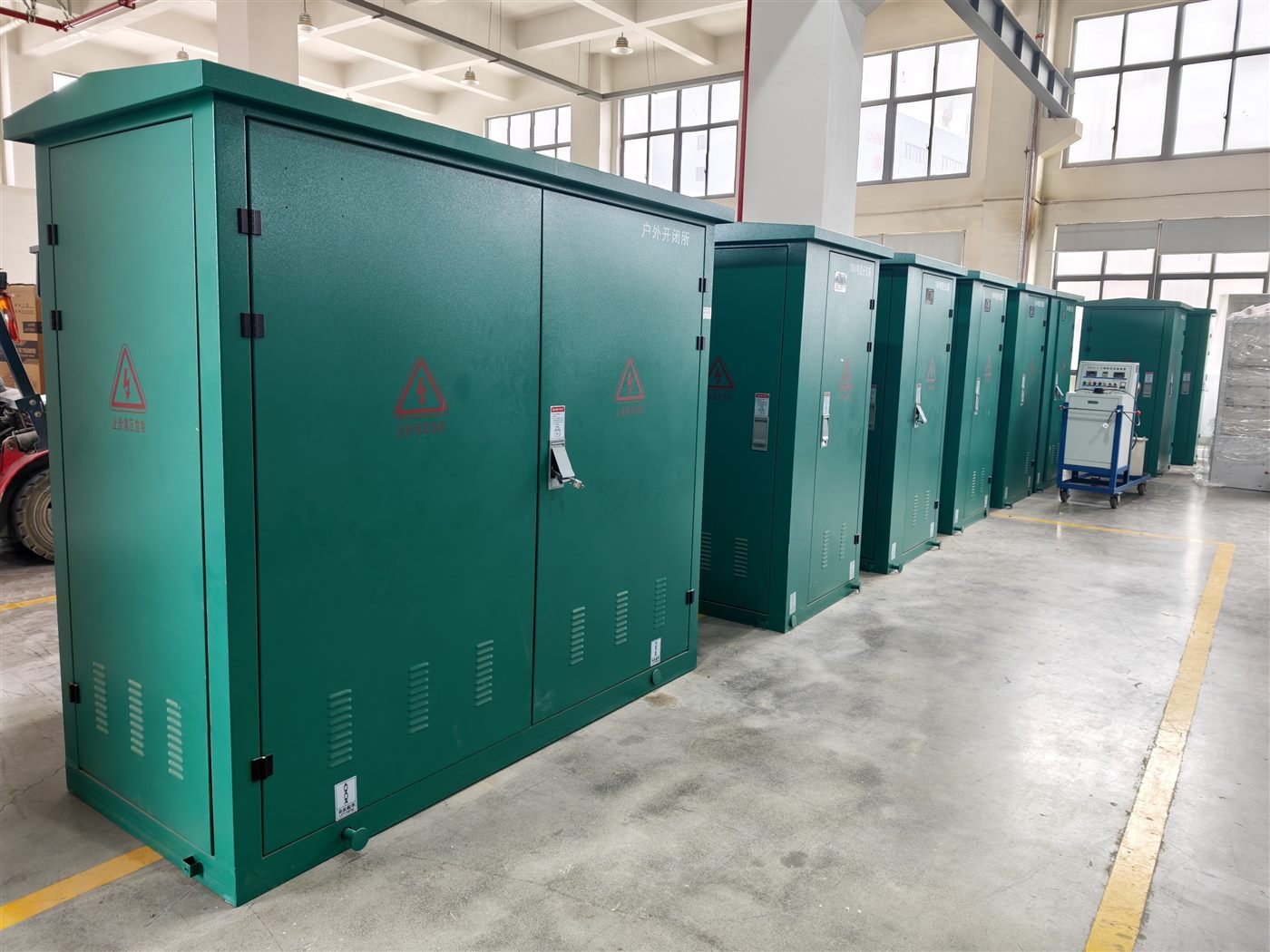
Salt spray does not fail a switchgear enclosure in one season. It removes a few micrometres of zinc a year, then starts on the steel, then the door stops closing squarely and the insulation begins tracking. By the time an operator notices, the panel is usually beyond repair. Most of that damage is decided at the specification stage, not at the maintenance stage. Good switchgear corrosion protection is therefore a purchasing decision long before it becomes a maintenance ritual.
What Salt Spray Does to a Switchgear Enclosure
Sea air carries chloride aerosol. On steel, chlorides break down the passive layer, and corrosion runs fastest in the splash zone and under a canopy where condensate sits. On the electrical side the same chlorides settle on insulators and creep across the surface, so a coastal panel starts tracking long before an inland panel of the same age shows its first rust spot.
Three variables set the rate: distance from the shoreline, prevailing wind, and how long the surface stays wet. A site 200 m inland behind a hill behaves like a different climate from a jetty 10 m from the water, even though both are called coastal.
5 Design Choices That Extend Service Life
- Choose the material before the paint. Hot-dip galvanised steel, aluminium and 304 or 316L stainless behave very differently in chloride air. Within 1 km of the sea, 316L or a galvanised-plus-coated build is the practical choice; ordinary cold-rolled sheet with a single powder coat is not.
- Specify a coating build, not a colour. Ask for the zinc thickness in micrometres, the pretreatment, the powder type and the dry film thickness. A colour chip tells you nothing about whether the panel will still hold a door seal in year eight.
- Lift the enclosure off the ground. A 200 mm plinth or concrete kerb keeps the base out of standing water and away from salt splash. Cable entries from below should sit inside the plinth, not in the wet zone.
- Control condensation, not only rain. An IP54 or IP55 enclosure stops water jets but traps humidity. Add anti-condensation heaters, a breather or a small ventilation scheme, and check the dew point on the busbar chamber in the early morning.
- Design for inspection. Detachable gland plates, stainless hinges and fasteners, and no direct contact between dissimilar metals. A panel nobody can open is a panel nobody inspects.
Coating Systems Compared
The table below reflects what we see on exported panels and what the standard salt-spray tests actually report. Treat the hours as a ranking tool, not a warranty number.
| System | Typical build | Neutral salt spray (ISO 9227) | Best for | Watch out for |
|---|---|---|---|---|
| Hot-dip galvanised steel | 65 – 85 µm zinc | 500 – 1000 h | Frames, plinths, supports | White rust if stored wet |
| Powder coat on cold steel | 60 – 80 µm polyester | 200 – 400 h | Indoor and sheltered panels | Edge chipping starts corrosion |
| Duplex: galvanised plus powder | 85 µm zinc + 80 µm powder | 1500 h and above | Outdoor coastal enclosures | Pretreatment quality decides life |
| Stainless 304 | 2 mm sheet, brushed | No red rust, pitting possible | Industrial coastal, sheltered | Pitting in splash zone |
| Stainless 316L | 2 mm sheet, pickled | No red rust, minimal pitting | Within 1 km of the sea | Cost, and galvanic contact with steel |
Two practical notes. First, a duplex coating is only as good as the surface preparation under it, so ask for the blasting grade and the interval between blasting and priming. Second, every cut edge, weld and threaded hole is a weak point; those need a repair coat applied after fabrication, not before.
Installation Details That Decide the Outcome
- Seal cable entries with a rated gland and a drip loop, so water runs away from the box instead of into it.
- Keep the enclosure out of direct spray from roof drainage and cooling tower plumes.
- Bond all metallic parts to one earthing point so galvanic cells have no driving voltage.
- Use stainless or hot-dip galvanised hardware throughout; one zinc-plated bolt starts a rust streak.
- Leave a 100 mm air gap behind the panel for airflow and inspection.
- Record the coating thickness on delivery and re-check it at the first annual service.
Put switchgear corrosion protection into the purchase order as measurable line items: material grade, zinc thickness, powder type, and the repair coat on cut edges. A supplier who cannot state those numbers is quoting a colour, not a coating.
Corrosion and moisture travel together, so the maintenance routine has to cover both. Start with the humidity control described in our anti-condensation heater guide, then run the contact and mechanism checks in the 10-step MV switchgear maintenance plan. A yearly infrared thermography survey catches the joints that corrosion has already warmed up, and outdoor packages that include a transfer scheme should also follow the enclosure notes in the ATS selection checks.
FAQ
How far from the sea does salt spray matter?
Chloride deposition drops quickly with distance, but wind and terrain change the picture. Within 1 km we specify 316L or a duplex coating; out to 5 km a duplex system is usually enough.
Is IP66 enough for a coastal site?
No. Ingress protection says nothing about corrosion. A sealed IP66 box still corrodes on the outside and still condenses on the inside.
Which coating lasts longest outdoors?
A duplex system, galvanising plus powder coat, gives the best cost-to-life ratio for steel. Stainless 316L lasts longer but costs considerably more per square metre.
Can corroded panels be repaired on site?
Light surface rust can be mechanically cleaned, passivated and recoated. Once perforation or busbar corrosion appears, replace the enclosure rather than patch it.
How often should a coastal panel be inspected?
Twice a year for the first two years, then annually if the coating is holding. Check hinges, seals, gland plates and the base frame every visit.
About Electric-GS
Electric-GS is an OEM/ODM switchgear factory in Yueqing, Zhejiang, China. We build RMU, GIS, MV and LV switchgear, outdoor cable boxes, ATS panels and packaged substations, and we quote enclosure material and coating build against the site conditions you give us. Send the location, distance from the shoreline and the required IP rating to info@electric-gs.com or WhatsApp +86 135 8897 8050. Product ranges are listed on electricgs.com, and Chinese technical notes are on electric-cn.com.
2 thoughts