
Why Maintenance Decides Breaker Life
A vacuum circuit breaker is sold as a low maintenance device. That is true compared with an oil breaker, but it is not a licence to ignore it. Most of the failures we see in the field are not failed vacuum bottles. They are mechanisms that stopped working because nobody looked at them for six years.
The vacuum interrupter itself usually lasts for the full electrical life of the panel. What fails first is around it: a dried out lubricant, a loose auxiliary contact, a burnt coil, a corroded terminal, or a counter that nobody reset. Maintenance on a VCB is therefore mostly mechanical work, with a small amount of electrical testing.
This guide lists the six checks that matter, the intervals we recommend, and the symptoms that should stop a breaker from being returned to service.
Check 1: Contact Wear and Interrupter Condition
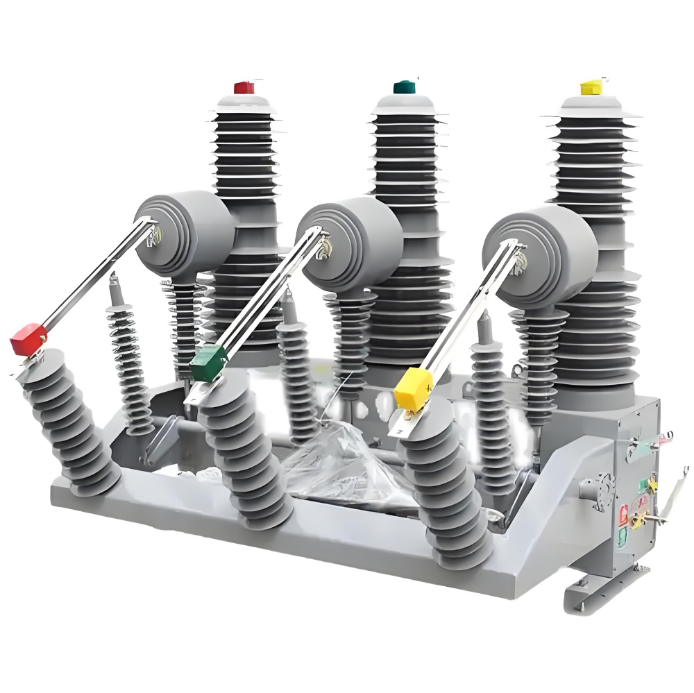
Every vacuum interrupter has a rated number of mechanical and electrical operations. Every close and open moves a little metal. The contact erosion shows up as a change in the resistance across the bottle and as a rising travel distance.
What to measure:
- Contact resistance across each pole, compared with the commissioning value.
- Contact travel and penetration, against the manufacturer curve.
- Operation counter reading, against the rated mechanical endurance.
- Power frequency withstand on the bottle, if the panel is out for a major service.
A resistance rise of more than twenty percent over the baseline, or travel outside the band, means the bottle is near the end of its life.
Check 2: Mechanism, Lubrication and Linkage
This is where most real failures start. Springs weaken, cams wear, and lubricant turns into a paste that holds the mechanism back.
| Item | Interval | What to look for | Action if abnormal |
|---|---|---|---|
| Closing and opening spring | Annual | Free length, cracks, permanent set | Replace as a set |
| Lubrication of cams and gears | 6 to 12 months | Dry, hardened or contaminated grease | Clean and relubricate |
| Linkage pins and bearings | Annual | Wear, play, loose pins | Replace worn pins |
| Operation counter | Every service | Reading versus nameplate endurance | Plan replacement |
| Manual trip and close | Every service | Free movement, no binding | Adjust and retest |
| Shock absorber | Annual | Oil leak, reduced damping | Replace damper |
The operating mechanism guide explains how the spring, cam and linkage should move together. If the manual operation feels stiff, the electrical operation will be worse under load.
Check 3: Auxiliary and Control Circuits
The breaker only trips if the coil gets the signal. Control circuit faults are the most common cause of a breaker that looks healthy but refuses to operate.
- Inspect auxiliary contacts for pitting and misalignment.
- Check trip and close coil resistance against the nameplate value.
- Verify anti pumping relay function.
- Test the undervoltage release, if fitted, at its rated drop out value.
- Check wiring terminals for looseness and corrosion.
- Confirm the local and remote control interlocks still work.
A coil that has gone open circuit will not show up in any dielectric test. It only shows up when someone needs the breaker to trip.
Check 4: Insulation and Terminal Condition
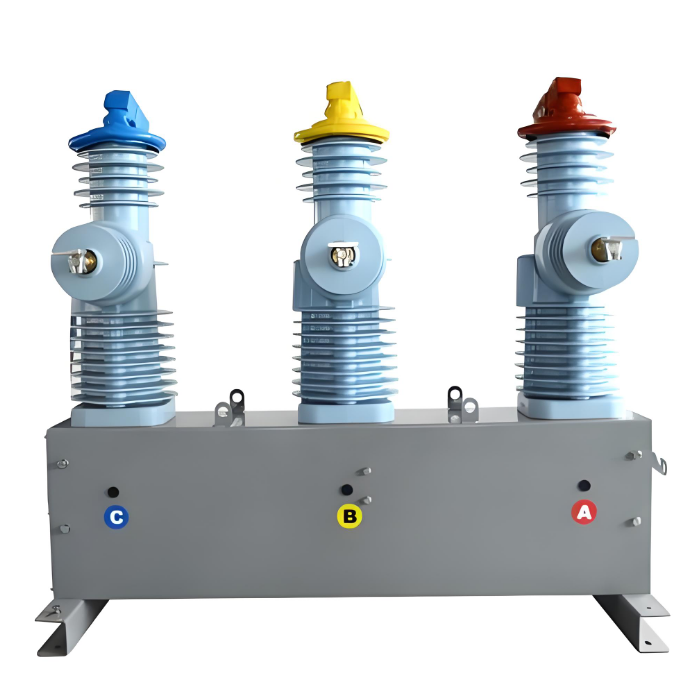
Dust, moisture and tracking on the insulating parts cause most external flashovers. On outdoor breakers, the porcelain or composite housing takes the weather for years.
Look for:
- Tracking marks, cracks or chipping on bushings and housings.
- Corrosion on terminals and on the cable lugs.
- Water ingress marks inside the mechanism box.
- Heater and anti condensation function on outdoor models.
Clean dry surfaces are as important as any test value. A dirty bushing can flash over at a voltage it once held easily.
Check 5: Timing and Operation Test
Timing tells you whether the mechanism still delivers what the nameplate promises.
At each major service, record:
- Closing time and opening time per phase.
- Phase spread between poles.
- Minimum trip voltage test at 65 and 85 percent of rated coil voltage.
- Three consecutive close open cycles without recharging faults.
A drift in timing of more than ten percent from the commissioning record is a signal to open the mechanism, not to adjust the test result.
Check 6: Documentation and Spares
The last check is the one that keeps the other five useful. A maintenance record without a baseline is just a number.
- Keep the commissioning sheet with contact resistance, travel and timing values.
- Log every operation count and every trip, including the reason.
- Hold one set of springs, one coil and one auxiliary contact block as spares.
- Record the ambient conditions at each service.
Add these six checks to the site wide switchgear maintenance plan and the breaker becomes predictable instead of reactive.
Frequently Asked Questions
How often should a vacuum circuit breaker be serviced?
Annually for a visual and functional check, and a full mechanical service every three to five years or after a short circuit trip. Severe duty sites need shorter intervals.
Do vacuum bottles need replacing on a schedule?
No. Replace on condition, using contact resistance, travel and operation count against the baseline. Most bottles outlive the panel.
What is the most common VCB failure?
Mechanism and control circuit faults, not interrupter failure. Dried lubricant, weak springs and open coils account for most incidents.
Can maintenance be done with the breaker in service?
Visual checks and infrared scans, yes. Any work on the mechanism, contacts or wiring needs the breaker isolated and the panel locked out.
Why does timing drift matter?
Longer opening time increases arc duration and stress on downstream equipment. It also signals a mechanism that is losing energy.
When should a VCB be replaced instead of repaired?
When the bottle is at end of life, when spares are no longer available, or when the short circuit rating no longer matches the network. The 33kV breaker guide covers rating selection.
About Electric-GS
Electric-GS is an OEM and ODM manufacturer in Yueqing, China. We build vacuum circuit breakers, ring main units, SF6 GIS and medium voltage switchgear, and we supply service kits, springs and coils for the models we ship. Compare technologies in our SF6 versus vacuum selection guide, and review the acceptance test set in the switchgear testing guide. Contact us at info@electric-gs.com or WhatsApp +86 135 8897 8050. See the Electric-GS global site and our China site.
One thought