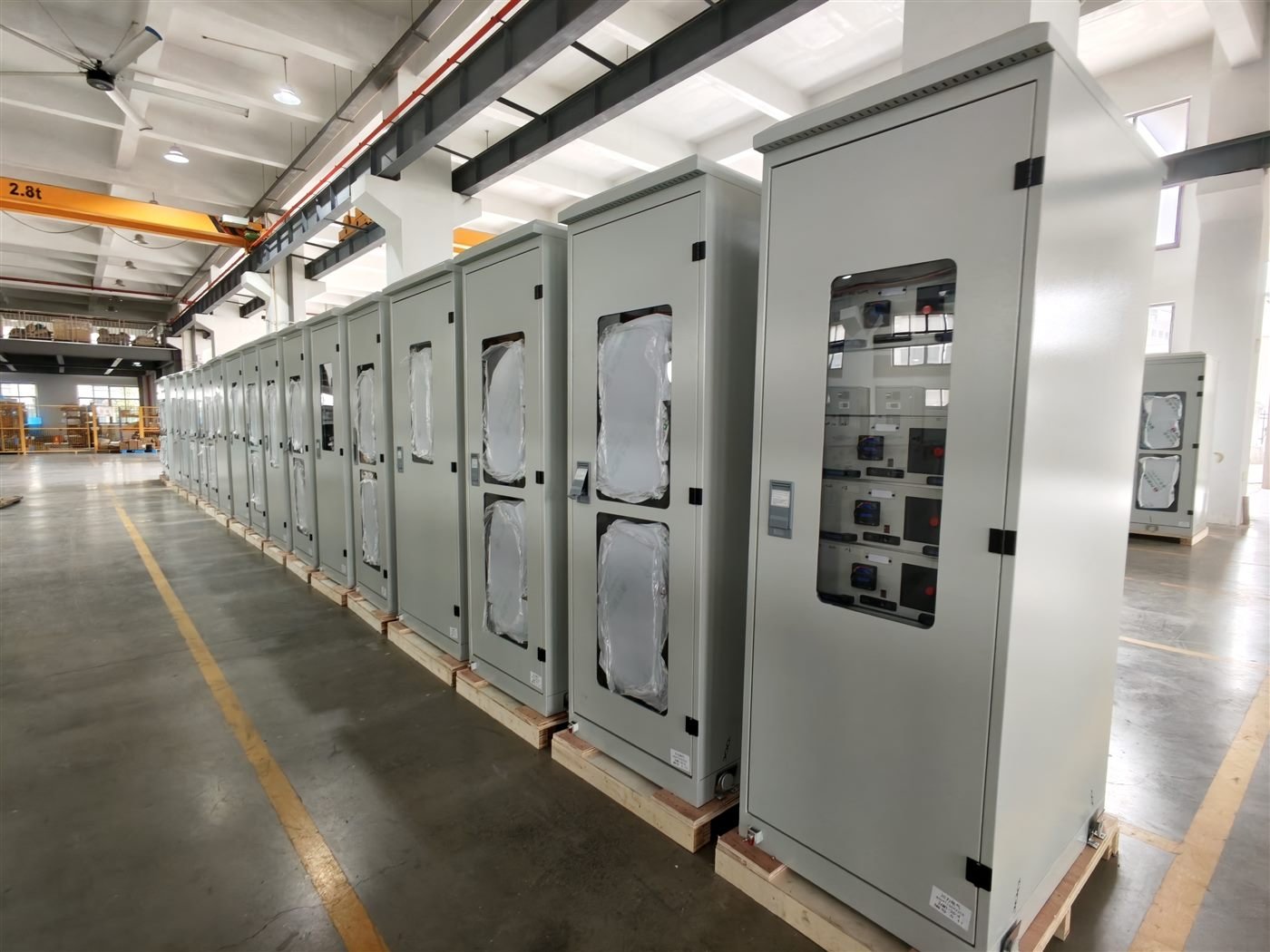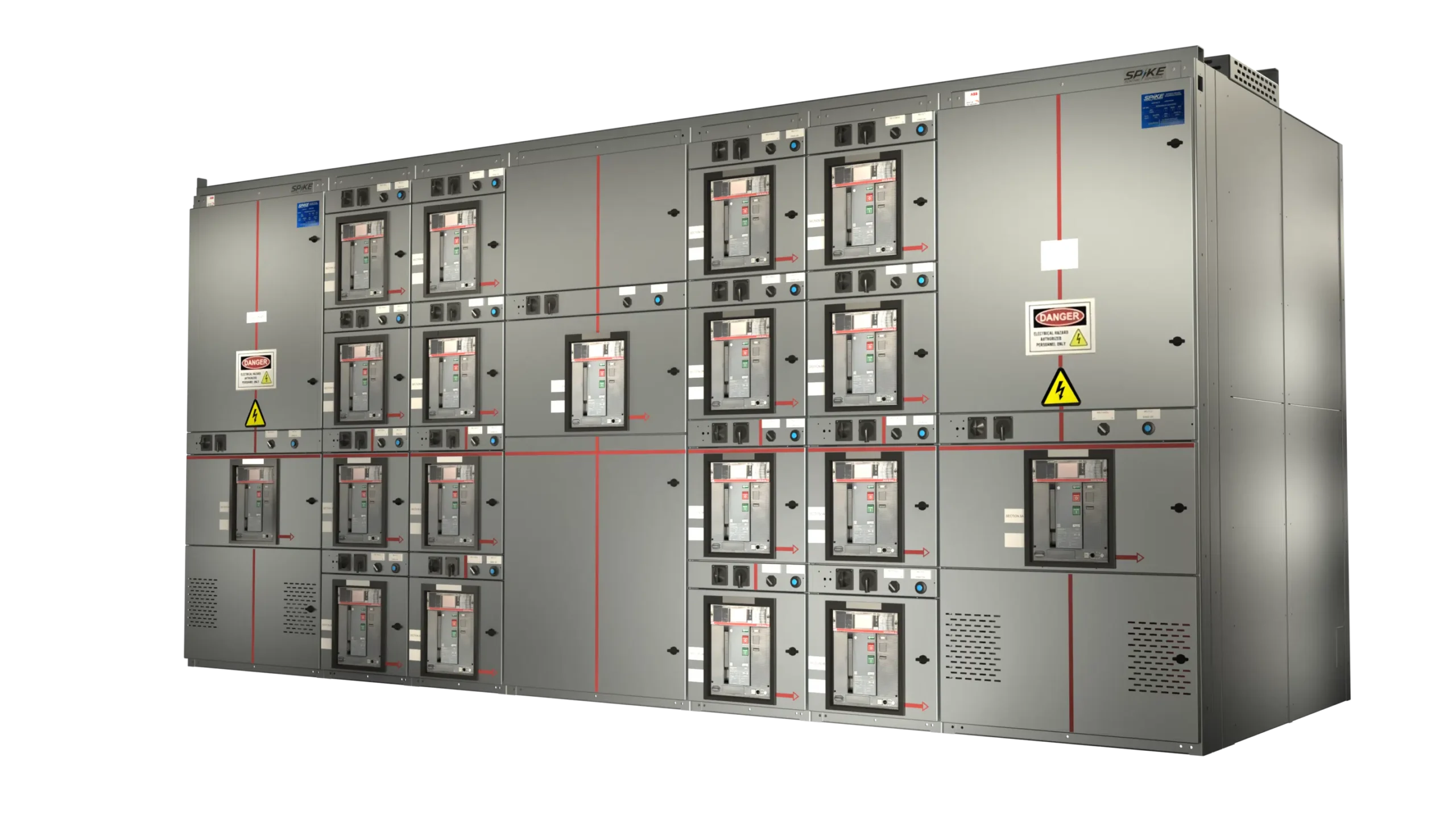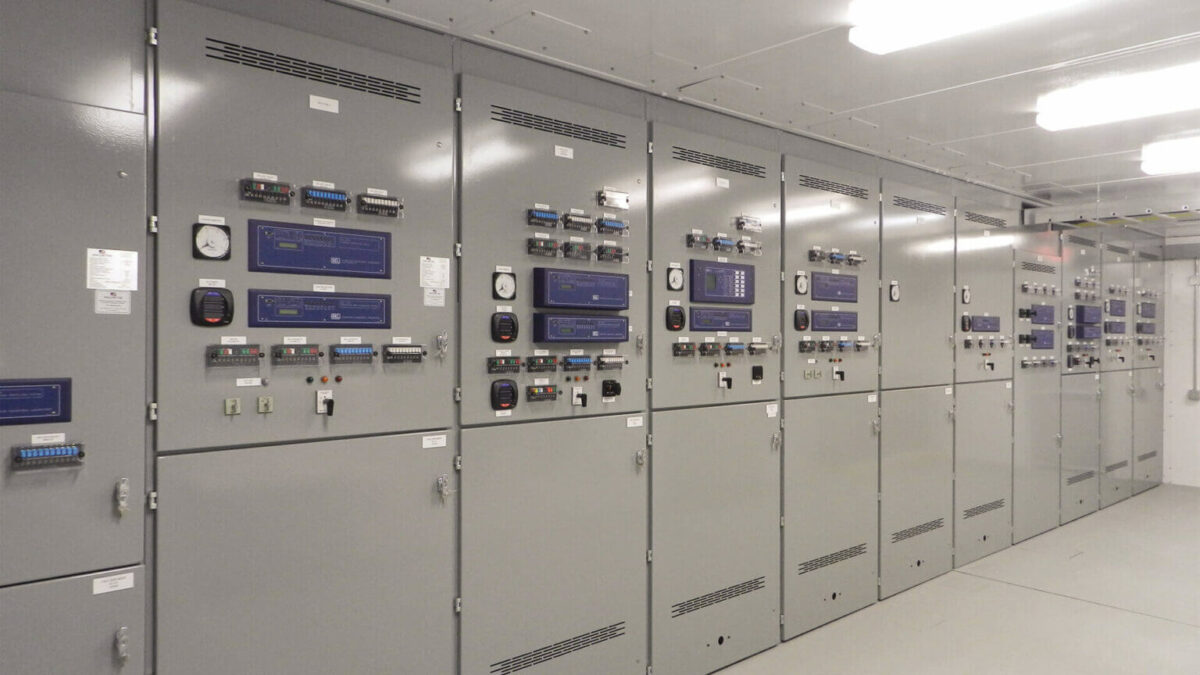
An earthquake rarely breaks a circuit breaker. It moves the enclosure, and the enclosure decides what happens next: a door swings open, a relay chatters, a base plate slides 20 mm, a cable tray pulls the busbar out of its clamp. Switchgear seismic design is about keeping the assembly alive through that movement, not about making the steel thicker.
What Seismic Qualification Actually Asks For
A qualification test does not ask whether the panel is undamaged. It asks whether the panel keeps working. The acceptance criteria are usually four: the structure stays standing, the anchorage holds, no switching operation occurs during the shake, and the protective functions remain available afterwards.
There are two accepted routes. One is a shake-table test on a representative assembly, run in three axes with the enclosure loaded as it will be in service. The other is analysis, a static or dynamic calculation that shows the same result for a family of similar panels. Most tenders accept the second only when the first exists for a comparable design.
6 Rules That Decide Whether the Panel Survives
- Anchor into structure, not into screed. A 60 mm floor finish will not hold a 600 kg section. Anchor into the structural slab with chemical or mechanical anchors at the embedment depth the manufacturer states, and prove it with pull-out tests on a sample of fixings on site.
- Stiffen the frame, not just the base. Diagonal bracing, a welded base frame and thicker door skins do more than a heavier plinth. Doors need multi-point latches; a single quarter-turn latch will open under a shake.
- Keep the centre of gravity low. Put the heaviest components in the bottom of the vertical section. A top-heavy panel multiplies the moment at the anchors, and that moment is what fails first.
- Restrain cables and busways. Cable trays, conduit and busway drops must be anchored independently of the panel. Use a flexible section where the building interface ends and the equipment begins, so the two can move separately.
- Protect the instruments. Relays and meters go on anti-vibration mounts, DIN rail runs are kept short and supported, and any device with a stated seismic withstand rating is preferred over one without.
- Document the qualification. A test report or analysis note naming the panel family, the acceleration input and the acceptance criteria. Without that paper, the panel is only “designed for seismic”, which means nothing in a review meeting.
Qualification Standards Compared
Different markets ask for different evidence. The table below shows what each document actually covers, so you can match the certificate to the tender clause instead of sending the wrong report.
| Standard | Scope | Typical input | Evidence expected |
|---|---|---|---|
| IEC 62271-210 | MV switchgear and controlgear assemblies, 1 – 35 kV | Shake table, three axes, service-mounted condition | Test report with acceptance criteria per assembly family |
| IEEE 693 | Substation equipment, including enclosures | High, moderate or low performance level, site specific | Qualification report plus anchorage calculation |
| GB 50260 | Seismic design of electrical installations in China | Design acceleration by seismic intensity zone | Design calculation and anchorage detail drawings |
| IEC 61439 series | LV assemblies | No dedicated seismic clause; project spec applies | Structural calculation plus project-specific test if asked |
| Client specification | Site-specific, common in utility and O&G tenders | Site PGA, spectrum or zone factor | Whatever the specification lists, clause by clause |
Two points worth flagging. First, an IEC 61439 certificate does not answer a seismic clause; LV assemblies need a separate structural argument. Second, a report for one panel family does not automatically cover a wider section, a taller section or a different internal layout, so check the model list on the certificate before you submit it.
Site Details That Fail First
- Anchors installed through waterproofing membrane without a sleeve; the membrane compresses and the fixing goes slack.
- Panels bolted to a raised access floor instead of the structural slab beneath it.
- Cable glands left loose, so the cable whips and loads the terminal block.
- Doors with glass panels and no bracing; the glass survives, the hinges do not.
- Adjacent sections coupled only by the shipping bolts, with no inter-section tie.
- Relay panels 2 m tall with no top restraint, free to whip at the top of the section.
Anchorage quality is the single most common finding in a post-earthquake inspection, and it is also the cheapest thing to get right at installation. The mechanical checks in our MV switchgear maintenance plan cover the bolted connections and mechanism condition that a shake exposes; the vacuum circuit breaker maintenance guide covers the interrupters themselves. After any seismic event, run an infrared thermography survey on the joints before re-energising, and if the site also uses an outdoor transfer scheme, check the enclosure fixing notes in the ATS selection checks.
FAQ
Does every project need a seismic test report?
No. Low-seismic zones are usually satisfied with a design calculation and anchoring details. Utility, hospital and oil and gas projects typically ask for a test report regardless of zone.
Which acceleration figure should we design to?
The one in the project specification or the local code for the site, not a generic catalogue value. If the specification is silent, ask for the site peak ground acceleration in writing before quoting.
Can a standard panel be upgraded for seismic use?
Sometimes. Bracing, heavier doors and a stronger base frame can be added at the design stage. Once the enclosure is built, retrofitting stiffness is expensive and rarely documented properly.
What is the most common failure in a shake test?
Door latches and relay chatter, not structural collapse. The frame usually holds; the small parts are what stop the assembly from passing.
How long does qualification take?
A shake-table programme on a new family usually runs six to ten weeks including preparation and reporting. Reusing an existing qualified family is much faster, which is why model lists matter.
About Electric-GS
Electric-GS is an OEM/ODM switchgear factory in Yueqing, Zhejiang, China. We build RMU, GIS, MV and LV switchgear, outdoor cable boxes and packaged substations, and we supply the structural and anchorage documentation that seismic tenders ask for. Send the site acceleration, the standard clause and the panel schedule to info@electric-gs.com or WhatsApp +86 135 8897 8050. Product ranges are on electricgs.com, and Chinese technical notes are on electric-cn.com.